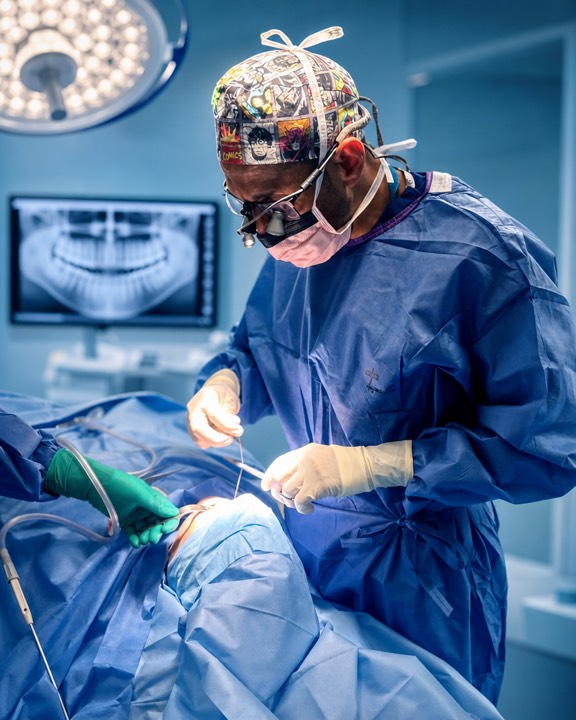
Oral surgery
Surgical dental care, clearly explained for patients seeking treatment directly and for dentists and GPs referring their patients.
What we can treat
Dentists and GPs can refer patients for procedures that require surgical expertise, involve important structures such as nerves or the sinus, or would benefit from dedicated surgical experience.
Sherif welcomes referrals for the procedures listed below. Patients are also welcome to contact us directly to arrange a consultation, without needing a referral from their dentist or GP.
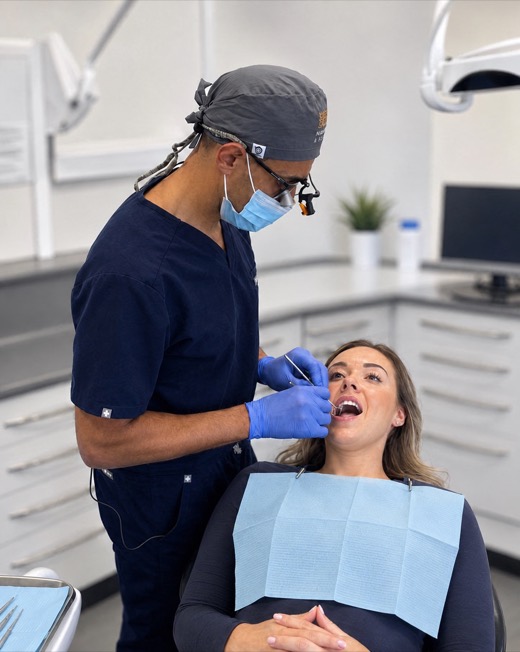
- Complex and simple extractions
- Teeth that are broken down, heavily filled, root-treated or awkwardly positioned, where a straightforward extraction is not possible.
- Wisdom tooth removal & coronectomy
- Impacted wisdom teeth, including coronectomy where roots lie close to the nerve in the lower jaw. Full details on the wisdom teeth page.
- Orthodontic tooth exposure & bonding
- Uncovering a buried tooth and attaching a bracket and chain so an orthodontist can guide it into position. Planned jointly with your orthodontist.
- Impacted canines & supernumerary teeth
- Canines that have failed to come through, and extra teeth that block or displace the normal dentition.
- Bone and soft tissue grafting, including sinus lifts
- Rebuilding bone or gum where it has been lost, usually to create a secure foundation for an implant. A sinus lift raises the sinus floor in the upper back jaw to make room for bone.
- Oral biopsies
- Taking a small tissue sample from a lesion in the mouth so it can be examined and a diagnosis reached.
- Assessment & management of cysts and lesions
- Investigation and surgical treatment of cysts and other changes in the soft tissues or jaws, often first spotted on a routine dental X-ray.
- Apicectomy
- Removing the tip of a tooth root and sealing it, where infection persists after root canal treatment and re-treatment is not the answer.
- Frenectomy
- Releasing a restrictive frenum — the small band of tissue under the lip or tongue — where it is affecting function, gum health or orthodontic treatment.
- Dental implants
- Single missing teeth through to full-arch reconstruction. Full details on the dental implants page.
Anxiety, anaesthetic and IV sedation
Many people delay necessary procedures because they feel anxious about the appointment itself, rather than the treatment they need. This is very common, and something Sherif takes into account from the outset.
Sherif regularly treats patients who find dental treatment difficult or overwhelming. You will be given time to understand what is happening, with each stage explained before treatment begins and as it progresses. Nothing is rushed, and you can ask to stop at any point. For many patients, this calm and considered approach is all they need to feel comfortable proceeding.
Intravenous (IV) sedation
For patients who feel particularly anxious about treatment, intravenous (IV) sedation can help make the experience much more comfortable. A sedative is given through a small cannula placed in the hand or arm, and begins to work within a few minutes.
You remain conscious and able to communicate throughout treatment. IV sedation is not a general anaesthetic — it produces a deeply relaxed state. Many patients lose track of time and remember very little, if anything, about the procedure afterwards. Local anaesthetic is also used to ensure the area being treated is completely numb.
IV sedation is not suitable for everyone. Sherif will review your medical history, medications and planned treatment during your consultation to determine whether it is the right option for you.
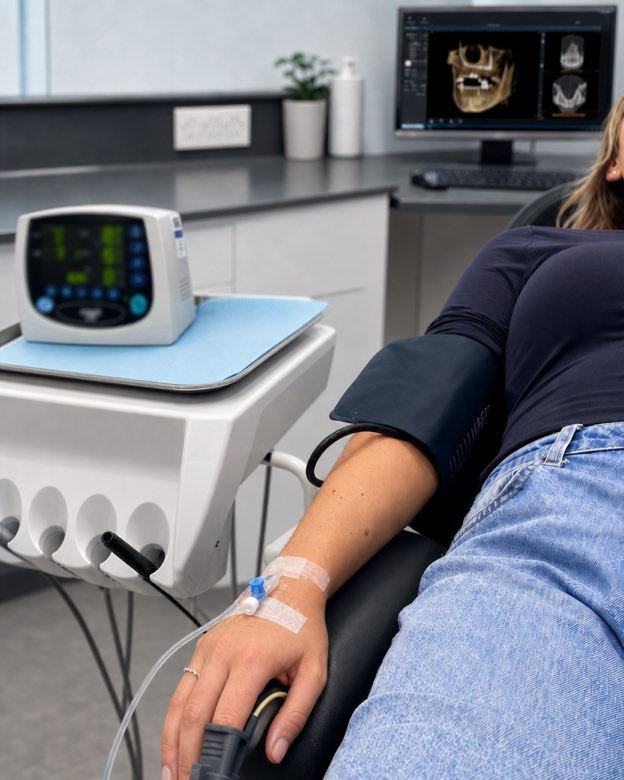
If you are sedated, you will need to arrange
- An escort A responsible adult to take you home afterwards and stay with you for the rest of the day.
- A clear 24 hours No driving, operating machinery, drinking alcohol or signing anything legally binding for a full day afterwards.
- Your medication list Bring details of everything you take, including anything bought over the counter.
- Pre-appointment instructions You will be given specific guidance on eating and drinking beforehand. Follow it exactly, or the appointment may need rescheduling.
If anxiety has been holding you back from treatment, let us know when you get in touch. It simply means we can tailor your consultation to make you feel as comfortable and at ease as possible.

Referring a patient
Sherif welcomes referrals for wisdom teeth removal, oral surgery and dental implant treatment. He works alongside referring clinicians to provide the treatment their patients need, while keeping them informed and ensuring patients return to their usual clinician for ongoing care.
What to include with your referral
- Patient’s name, date of birth and contact details
- The reason for referral and the treatment or assessment requested
- Relevant medical history and current medications
- Any available radiographs, including the date they were taken
- Any concerns about dental anxiety or treatment tolerance
What happens next
The referral is reviewed and the patient contacted to arrange a consultation. You receive a written summary of the assessment and, after treatment, a note of what was carried out and any follow-up the patient needs from you.
Questions about oral surgery
Is oral surgery safe?
Oral surgery is carried out routinely and is generally well tolerated, but like any surgery it carries risks — commonly swelling, bruising and discomfort, and less commonly infection, bleeding or altered sensation where a procedure sits near a nerve. The risks that actually apply to your case are identified from your examination and imaging and discussed with you before you decide anything.
Do I need a referral to be seen?
No. Referrals from dentists and GPs are welcome, but you can contact the practice yourself and arrange a consultation directly.
Do you offer IV sedation?
Yes. IV sedation is available for patients who feel particularly anxious about treatment or would prefer additional support during their procedure. A sedative is given through a small cannula in the hand or arm, helping you feel deeply relaxed while remaining conscious and able to respond.
IV sedation is not a general anaesthetic. Many patients find that they remember very little, if anything, about the procedure afterwards. Local anaesthetic is also used to ensure the treatment area is completely numb.
Sherif will assess whether sedation is suitable for you based on your medical history, medications and planned treatment. You will also need a responsible adult to accompany you home and follow the aftercare instructions provided, and you must not drive for 24 hours. More on sedation.
Will my own dentist continue to look after me?
Yes. If you have been referred for a specific procedure, your routine dental care remains with your own dentist. Once treatment is complete, you will return to them for your ongoing care, and they will receive an update outlining the treatment provided and any recommended follow-up.
How should I prepare for surgery?
Unless you have been advised otherwise, eat normally before your appointment and continue taking your usual medications. Please bring an up-to-date list of any medicines you take.
If you are having IV sedation, you will need a responsible adult to accompany you home and follow the specific instructions provided beforehand.
Wear something comfortable and, where possible, keep the rest of your day free so you can relax and recover after your procedure.
Arrange a consultation
Whether you have been referred or are contacting us directly, your first appointment is an opportunity to assess the problem, discuss your options and decide on the most appropriate treatment for you.